

Winter tyres and choosing by season
The types of winter tyre and how they differ from summer tyres, why they go on all four wheels and what snow rules require, off-season storage and what to check before buying — based on material from the tyre industry association and tyre makers. Plus how to search at Hub Garage.


Fit winter tyres on all four wheels, and check that at least 50% of the new tread remains.
Summer and winter tyres


The Japan Automobile Tyre Manufacturers Association (JATMA) lists three kinds of winter tyre: studless, severe snow and snow tyres.
Summer
- What it is
- For dry and wet roads
- What to check
- On snow and ice, chains or other anti-slip measures are needed
Studless winter
- What it is
- Winter tyre without studs: cold-flexible rubber and special tread design
- What to check
- At least 50% of the new tread depth remains
Severe snow and snow
- What it is
- Winter tyres with improved performance on snow
- What to check
- At least 50% of the new tread depth remains
All-season
- What it is
- For various surfaces; emphasis varies by model
- What to check
- Not a studless tyre; check winter performance in the maker's information
Read more
Studless tyres, the main type today, are winter tyres without studs. Their special rubber compound stays flexible in the cold, and the tread design helps remove the film of water on the ice surface that makes tyres slip.
Studless tyres can be used in summer, but a tyre maker explains that they accelerate, brake and corner less well than summer tyres. Once winter is over, switching to summer tyres made for dry and wet roads is recommended.
All-season tyres are designed for a range of surfaces, but which performance they emphasise varies by model, and they are not studless tyres. If you choose them, check their winter performance in the maker's information.
Tyre types and what to check4 rows
| Type | What it is | What to check |
|---|---|---|
| Summer | For dry and wet roads | On snow and ice, chains or other anti-slip measures are needed |
| Studless winter | Winter tyre without studs: cold-flexible rubber and special tread design | At least 50% of the new tread depth remains |
| Severe snow and snow | Winter tyres with improved performance on snow | At least 50% of the new tread depth remains |
| All-season | For various surfaces; emphasis varies by model | Not a studless tyre; check winter performance in the maker's information |
Hub Garage
Hub Garage items
Summer tyres, winter tyres and their corresponding wheel sets have separate categories. Wheels without tyres are listed separately. The season category is a search aid only — check each item's model and description to see whether it is a studless tyre.
Checking for a winter tyre
Hub Garage store guide
The season label is a guide; check the model and sidewall markings.


The season category is a search aid. Whether a tyre is a winter tyre is decided by its model and sidewall markings, not by the category name. If the model name does not make it clear, you can check the maker's information.
- On winter tyres that have platforms, ↑ marks on the sidewall show where they are.
- Some winter tyres have no platform, though, so a missing mark alone does not settle the question.
All-season tyres are not studless tyres.
Read more
For used winter tyres, also check the remaining tread and the production week and year. How wear bars differ from platforms is explained in the guide to tyre condition.
Narrowing the results


In the catalogue, start with rim diameter, then add width, aspect ratio and brand. If nothing matches, remove a filter. Do not substitute a similar size just to get a result — contact us instead.
Read more
For a winter set, a smaller rim diameter (inch-down) is one option. What to check — outer diameter, load index and brake clearance — is covered in the article on winter sets.
Catalogue filters show candidates that match your conditions; they do not certify that a wheel fits your vehicle.
Hub Garage
Purchase terms
Report defects in regular items within 7 days of receipt. C/D items have separate terms.
Winter tyresWinter wheel setsWinter tyre and wheel sets: thinking about inch-downHow to read a tyre size
All four wheels and snow rules
Hub Garage store guide
Winter tyres go on all four wheels, ideally all the same model.


Winter tyres go on all four wheels.
- Unless the vehicle or tyre maker instructs otherwise, all wheels should carry tyres of the same size (including load index and speed symbol), type, construction and category (summer, winter and so on).
- JATMA states that a vehicle is not stable unless winter tyres are fitted to every wheel.
- A tyre maker likewise warns that fitting them to the driven wheels only can upset the vehicle's behaviour, and advises fitting studless tyres of the same model to all wheels.
Check before fitting
Checked 0 of 6
Read more
On snowy or icy roads, prefectural rules require anti-slip measures such as winter tyres or chains (except in Okinawa). The rules differ by prefecture, and some count only winter tyres whose tread blocks are less than 50% worn. Toyama's rules, for example, require effective anti-slip measures suited to the road, such as chains or special anti-slip tyres (JATMA excerpt, as of August 2026).
When a chain requirement is in force, chains are needed even on winter tyres. Use chains sized for the tyre on the driven wheels or on the wheels the vehicle maker specifies. Follow the vehicle and chain manuals when fitting them, and check that they fit the tyre and clear the body. Driving on chains on roads without snow or ice can damage the tyres, chains and vehicle or cause a skid.
Off-season storage
Hub Garage store guide
Store away from direct sun and water; mounted sets lying flat where possible.
How tyres removed at the end of a season change depends on how they are stored. The tyre industry association and tyre makers list these points.
No direct sunlight
It speeds up rubber ageing; a cool, dark place is best.
No water
Rainwater left inside a tyre for a long time can damage the tyre and rust the rim; remove any water at once.
Away from oil and heat
Keep tyres away from oils, heaters and equipment that gives off sparks.
Not directly on the floor
Over long storage, chemicals can seep from the rubber and stain the floor, so put down thick cardboard or similar.
Tyre-and-wheel sets
Store tyre-and-wheel sets lying flat where possible to limit deformation of the contact area, lower the pressure to about half the normal pressure, and keep the valve caps on.
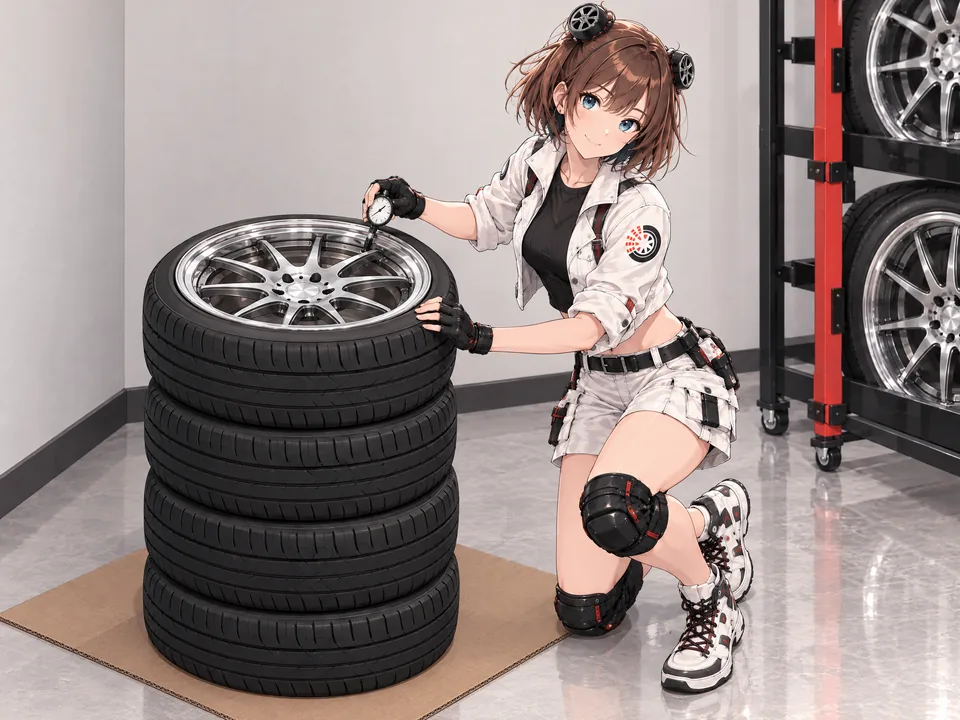

Storage and pre-fitting checks
Checked 0 of 6
Read more
Before fitting them next season, check for cracks, ageing and remaining tread, and bring the pressure back to the correct level.
Before you buy: checklist
Hub Garage store guide
Compare the remaining tread and the production week and year across all four tyres.
Checking these points before choosing used winter tyres or a set makes it easier to avoid a wrong choice.
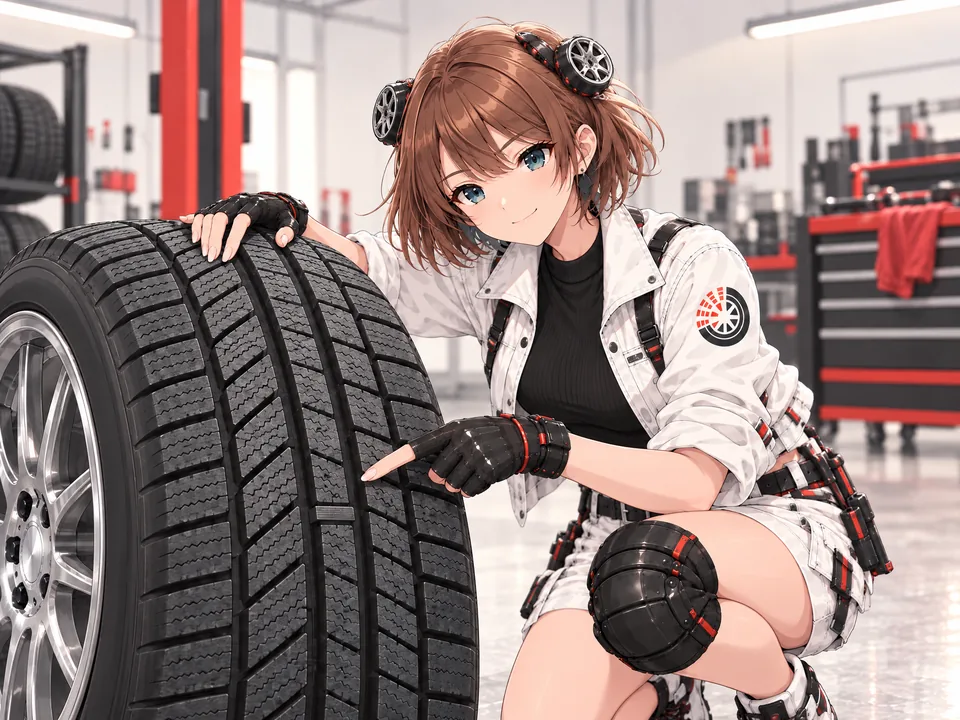

Check for yourself
Checked 0 of 7
Read more
A tyre maker advises choosing studless tyres to suit the roads you drive most and the performance you need. Compare the remaining tread and the production week and year across all four tyres.
Production week and yearPCD, J, ET and centre boreWinter tyre and wheel sets: thinking about inch-down